
Scenario planning gives leaders a way to think about multiple possible futures instead of just one forecast. It's a way of building adaptability and reducing decision anxiety in workforce planning.
Rather than betting everything on a single prediction, scenario planning helps you prepare for different possibilities, so when change happens, you're ready to respond with confidence.
Why It Matters for Workforce Planning
Traditional headcount forecasting assumes stability, but as we know, organizations can shift faster than expected, especially in times of change. Markets pivot, priorities shift, and strategies evolve.
"Scenario planning isn't about predicting the future; it's about preparing your organization to act confidently in different futures."
When you build scenarios into your workforce planning, you create space to ask better questions:
- What if growth accelerates faster than expected?
- What if we need to pivot our product strategy?
- What if key talent markets become more competitive?
Practical Frameworks
Here are a few structured ways you can build scenario thinking into your planning routines:
1. Define Key Drivers of Change
Start by identifying the 2-3 factors that would most significantly impact your workforce needs. These might include:
- Revenue growth rate
- Product portfolio changes
- Market conditions
- Technology adoption
💡 Pro Tip
Focus on drivers that are both uncertain and impactful. Things that are certain don't need scenarios, they're just facts you plan around.
2. Build Alternate Plausible Futures
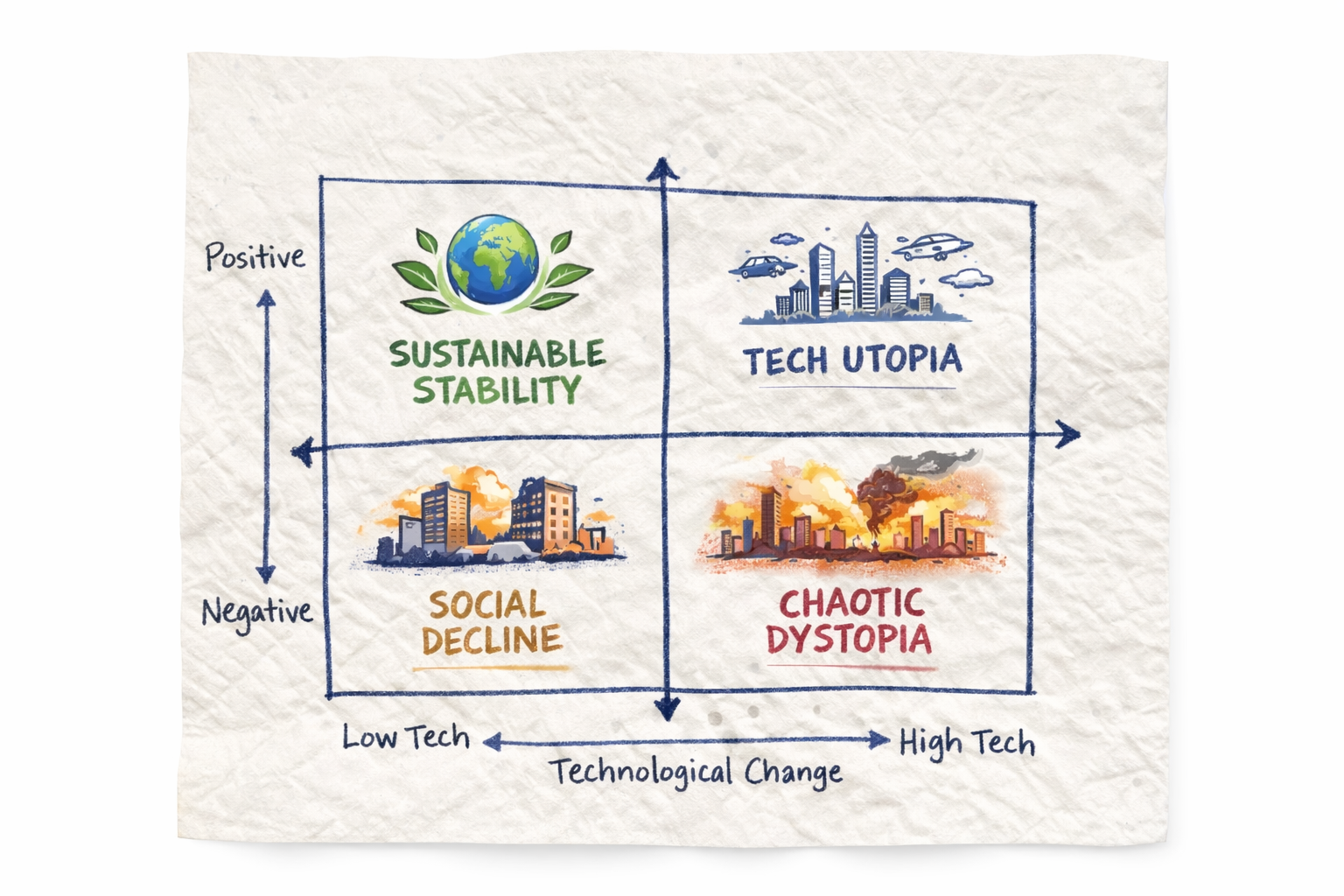
Create 2-4 distinct scenarios that combine your key drivers in different ways. Each scenario should be plausible (not fantasy) and meaningfully different from the others.


3. Stress-Test Your Plans
Take your current workforce plan and ask: "How would this hold up in each scenario?" Look for:
- Critical gaps that appear across multiple scenarios
- Flexibility points where you can adjust quickly
- No-regret moves that work in any future
Implementation Guide
Key Steps to Get Started
- Schedule a 2-hour scenario workshop with your leadership team
- Identify your top 2-3 drivers of workforce uncertainty
- Build 3 distinct scenarios combining these drivers
- Test your current plan against each scenario
- Identify flexible capacity and quick-adjustment levers
The beauty of scenario planning is that it doesn't require perfect prediction. It requires honest conversation about uncertainty and thoughtful preparation for multiple futures.
Conclusion
By embedding scenario thinking into your workforce planning practice, you build not just forecasts, but resilience and clarity. You move from rigid predictions to adaptive strategies.
Start small. Pick one area of your workforce plan that feels uncertain. Build two scenarios. See what you learn. The practice gets easier with repetition.