
Strategic workforce planning often begins with headcount models, capacity forecasts, and cost projections. But none of those matter if the organization itself is not designed to execute.
Org design answers a fundamental question: How should work be structured to deliver strategy? Role clarity answers the next one: Who is accountable for what?
Without these foundations, workforce plans become spreadsheets detached from operational reality.
Why Org Design Matters Before Headcount
Leaders often attempt to solve performance gaps by adding people. But structural ambiguity cannot be fixed with additional capacity.
"If work is unclear, adding headcount amplifies confusion instead of performance."
Strong organizational design ensures:
- Clear accountability for outcomes
- Minimal duplication of effort
- Logical decision rights
- Aligned reporting relationships
Strategic workforce planning should therefore start with structure, not hiring.
The Role Clarity Problem
Most execution friction is not caused by lack of effort. It is caused by overlapping mandates, unclear ownership, and informal decision pathways.
Common symptoms include:
- Multiple teams working on the same initiative
- Projects stalling due to approval ambiguity
- Managers acting as escalation hubs instead of decision-makers
- High-performing individuals feeling underutilized
Design Insight
If two people believe they are accountable for the same outcome, no one truly is.
Role clarity is not about rigid job descriptions. It is about defining decision authority, scope boundaries, and measurable outputs.
A Practical Framework for Org Design and Clarity
1. Start with Strategic Outcomes
Define 3–5 outcomes your division must deliver over the next 12–24 months. Structure should reflect these priorities directly.
2. Map Value Streams
Identify how work flows from idea to outcome. Where does it stall? Where does it duplicate? Structure should reduce friction along this path.


3. Clarify Decision Rights
For major recurring decisions, document:
- Who recommends
- Who decides
- Who executes
- Who is informed
4. Align Capacity to Accountabilities
Once accountabilities are clear, then assess capacity. Do critical roles have sufficient bandwidth? Are managers overloaded with tactical execution instead of leadership?
Implementation Guide
Practical Steps
- Conduct a role clarity workshop with your leadership team
- Document top 10 recurring decisions and assign explicit owners
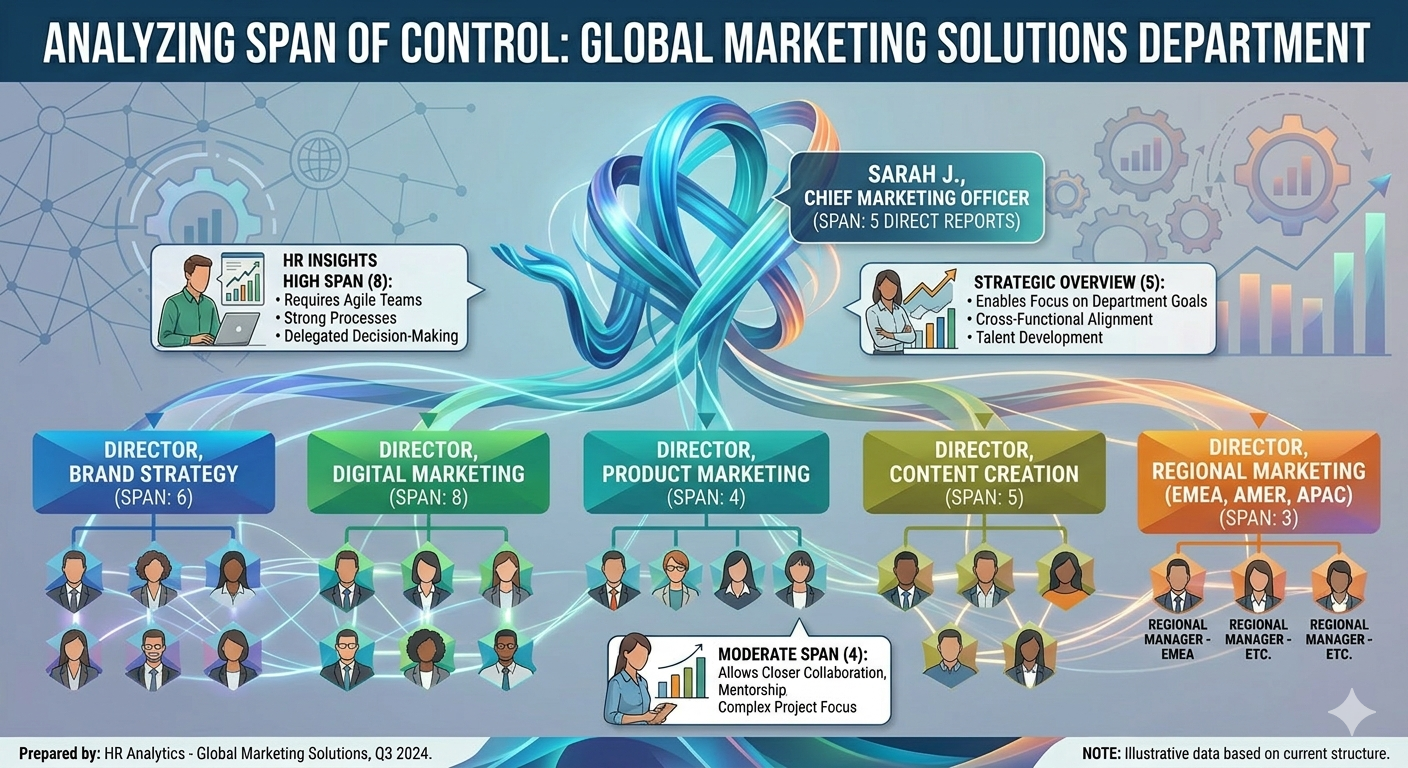
- Review spans and layers for unnecessary complexity
- Identify duplicated mandates across teams
- Only then adjust headcount or hiring plans
- Build a framework for leaders to use - download this one
In many cases, improved clarity eliminates the need for immediate hiring. Capacity becomes visible once structural noise is reduced.
Conclusion
Org design is strategy made visible. Role clarity is execution made possible.
Strategic workforce planning that ignores structure risks solving the wrong problem. When you align design, decision rights, and capacity, you create leverage. And leverage, not volume, is what drives performance.